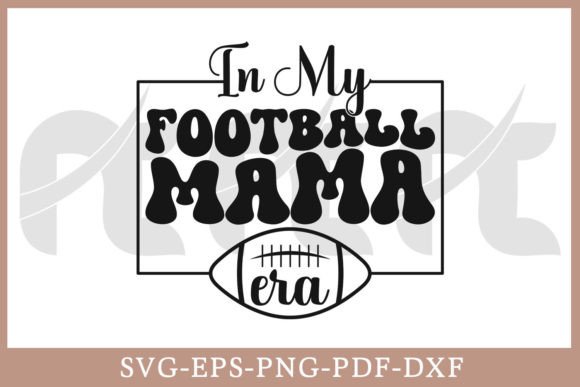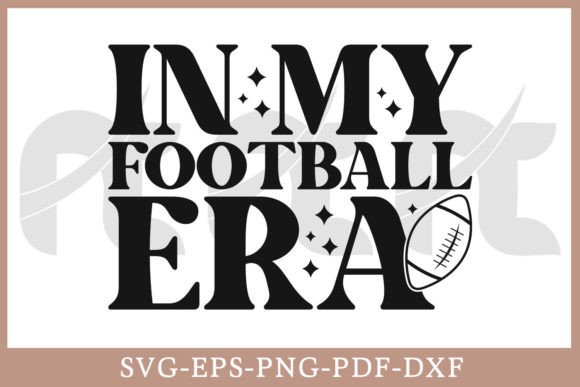
In My Detroit Football Era Retro Wavy SVG
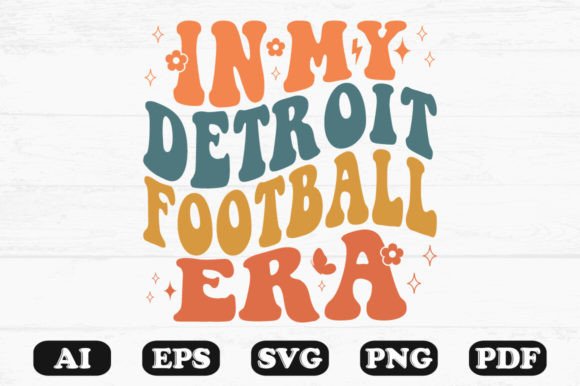
As a designer who’s stitched thousands of custom pieces—from boutique sweatshirts to baby onesies and Etsy-ready patches—I opened In My Detroit Football Era Retro Wavy SVG expecting boldness, but what stood out first was its confident restraint. This isn’t just another vintage football quote slapped onto a wavy baseline. It’s got rhythm: the letters sway like stadium banners in slow motion, the spacing breathes, and the weight distribution feels intentional—not rushed or over-digitized. It lands somewhere between nostalgic fan pride and quiet confidence, which makes it unusually versatile for real embroidery work.
What It Actually Looks Like Stitched—Not Just on Screen
Last week, I prepped a limited run of embroidered canvas tote bags for a local Detroit-themed pop-up shop. I chose In My Detroit Football Era Retro Wavy SVG for the front panel—not as a centerpiece, but as a subtle anchor below a small Lions logo patch. On screen, the wavy baseline reads as playful; under thread, it became something warmer: human, slightly imperfect, full of movement. The curves translated beautifully into satin stitch without distortion, and because the letterforms aren’t overly condensed or ultra-thin, there was no ghosting or skipped stitches—even at 8.5” wide on midweight canvas.
I tested it across three fabrics: a soft cotton twill apron (for a downtown café’s staff line), a fleece-lined baby hoodie (for a newborn gift set), and a structured cotton cap (front-embroidered, low-profile). On the apron? Crisp and legible—no puckering, thanks to balanced stitch density. On the hoodie? Slightly softer edges, but still highly readable—ideal for sentimental gifting where charm outweighs razor-sharp precision. On the cap? Tricky—but it held up. The gentle wave actually helped guide the needle around the curve, unlike rigid straight-line text that fights the dome shape.
Where It Shines—and Where You’ll Want to Pause
In My Detroit Football Era Retro Wavy SVG excels in medium-to-large applications: tote bag fronts, sweatshirt chests, pillow covers, tea towels, and nursery wall hangings. Its retro tone pairs naturally with mustard, navy, charcoal, and cream—not just black-and-white combos. As a machine embroidery design, it leans into fill and satin stitches rather than dense running-stitch outlines, so it reads well even at 6–7” wide without looking “busy.” That makes it a strong candidate for craft business owners building cohesive product lines—think holiday gift bundles (“Detroit Pride” + “Football Era” + “Made Here” trio) or small shop merchandise with regional authenticity.
That said, tread carefully with tiny applications. I tried scaling it down to 3.5” for a baby beanie—it lost its personality. The wave flattened, the letter spacing tightened unnaturally, and small details (like the subtle taper on the “D” and “F”) vanished in the stitching. Similarly, avoid using it on ultra-thin knits or heavily textured terry cloth without extra stabilizer: the wave’s flow depends on consistent fabric tension, and stretchy or uneven surfaces can warp the rhythm.
It also doesn’t need heavy layering. Unlike applique designs or multi-color logos, this is a clean typography SVG—meant to stand alone or sit beside one simple icon. Don’t try to stack it over busy prints or behind dense decorative borders. Its strength is clarity, not complexity.
Real Impact on Your Finished Product
Customers notice mood before measurement. When someone sees In My Detroit Football Era Retro Wavy SVG on a handmade product, they don’t read “SVG file”—they feel hometown pride, generational connection, or quiet nostalgia. That emotional resonance lifts perceived value. A $32 embroidered sweatshirt with this design sells more consistently than one with generic script, especially in regional markets or gift shops catering to alumni, families, or lifelong fans.
For Etsy sellers and creative entrepreneurs, that translates directly to trust and repeat engagement. Buyers associate thoughtful typography with craftsmanship—not just digital convenience. And because it’s rooted in a specific cultural moment (not just “vintage” as a trend), it avoids feeling disposable. It’s wearable storytelling.
Practical Designer Notes Before You Stitch
- Always test on scrap fabric first—especially if you’re pairing it with dark thread on light fabric or vice versa. The wave’s curvature affects how light hits each letter.
- Review stitch density before hooping. If your embroidery software shows tight fills in the thicker letter sections (like the “O” or “R”), consider reducing density by 5–10% to prevent stiffness on apparel.
- Confirm hoop size compatibility. At full width, this design likely needs a 5x7” hoop minimum. Smaller hoops will require strategic repositioning—or trimming the phrase, which risks losing its rhythmic balance.
- Inspect corners and terminals. The ends of the wave taper slightly—make sure those don’t get clipped during auto-trimming or manual hooping.
- Test in black-and-white mockups before finalizing listings. This design relies on contrast and silhouette—not color—so grayscale previews tell you more than RGB thumbnails.
- Use cutaway or tear-away stabilizer depending on fabric: cutaway for knits and caps, tear-away for stable wovens like tea towels or pillow covers.
- Verify licensing terms before selling finished items or bundling the file digitally. As a Graphics asset in the Crafts category, commercial use rights may vary—don’t assume.
In short: In My Detroit Football Era Retro Wavy SVG is a quietly powerful embroidery file—not flashy, not fussy, but deeply functional. It’s the kind of design that disappears into great products while making them feel unmistakably *yours*. Whether you're stitching for a client, prepping for craft fair season, or building a signature line for your small shop, it earns its place—not as filler, but as foundation.